
Menu
Address: D-30, Sushant Lok III, Sector 57, Gurugram, Haryana 122003

Bilateral tibia lengthening is a specialized orthopedic procedure designed to increase height by lengthening both tibial bones (shin bones) simultaneously. Height Increase Info (HII) provides information, coordination and rehabilitation support. The operating orthopedic surgeon is responsible for surgical assessment, alignment planning and follow-up of bone healing.
The tibia contributes significantly to overall leg length and body proportions. When performed with proper planning and rehabilitation, bilateral tibial lengthening may increase stature, but ankle movement, alignment and soft-tissue tolerance require ongoing review.
A precise surgical bone cut (osteotomy) is performed on both tibias while preserving surrounding soft tissues and blood supply.
An internal motorized nail or an external fixator is applied to enable gradual and controlled bone distraction.
Bone segments are separated slowly at approximately 1 mm per day. New bone tissue forms naturally in the gap through distraction osteogenesis.
The newly formed bone strengthens and matures while the device maintains alignment.
Structured physiotherapy aims to maintain ankle movement and muscle strength and reduce contracture risk. Stiffness, equinus deformity and gait changes can still occur.
A fully implanted motorized nail avoids external pin sites, but surgery and the implant still carry infection and other risks.
Combines intramedullary nail with temporary external fixation, reducing frame duration while maintaining stability.
Traditional circular frame used in complex cases, deformity corrections, or when internal nails are unsuitable.
Tibial lengthening targets must be agreed individually with the surgeon:
Larger corrections may require staged procedures and extended rehabilitation.
Safety depends on:
HII supports consultation coordination and rehabilitation planning. Confirm the operating surgeon, surgical hospital, risks and follow-up arrangements before deciding on bilateral tibia lengthening.
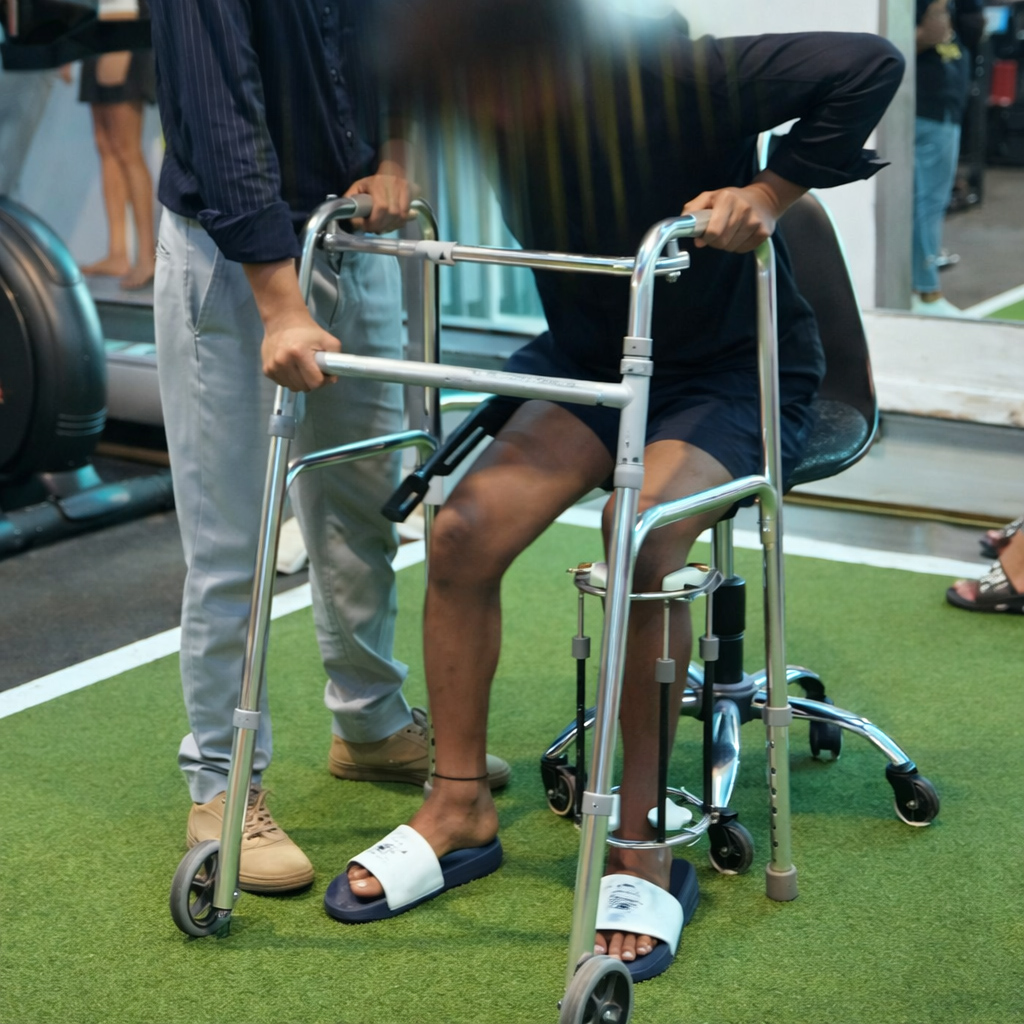
Because tibial lengthening places higher stress on ankle structures, rehabilitation discipline is especially important for optimal functional outcome.