
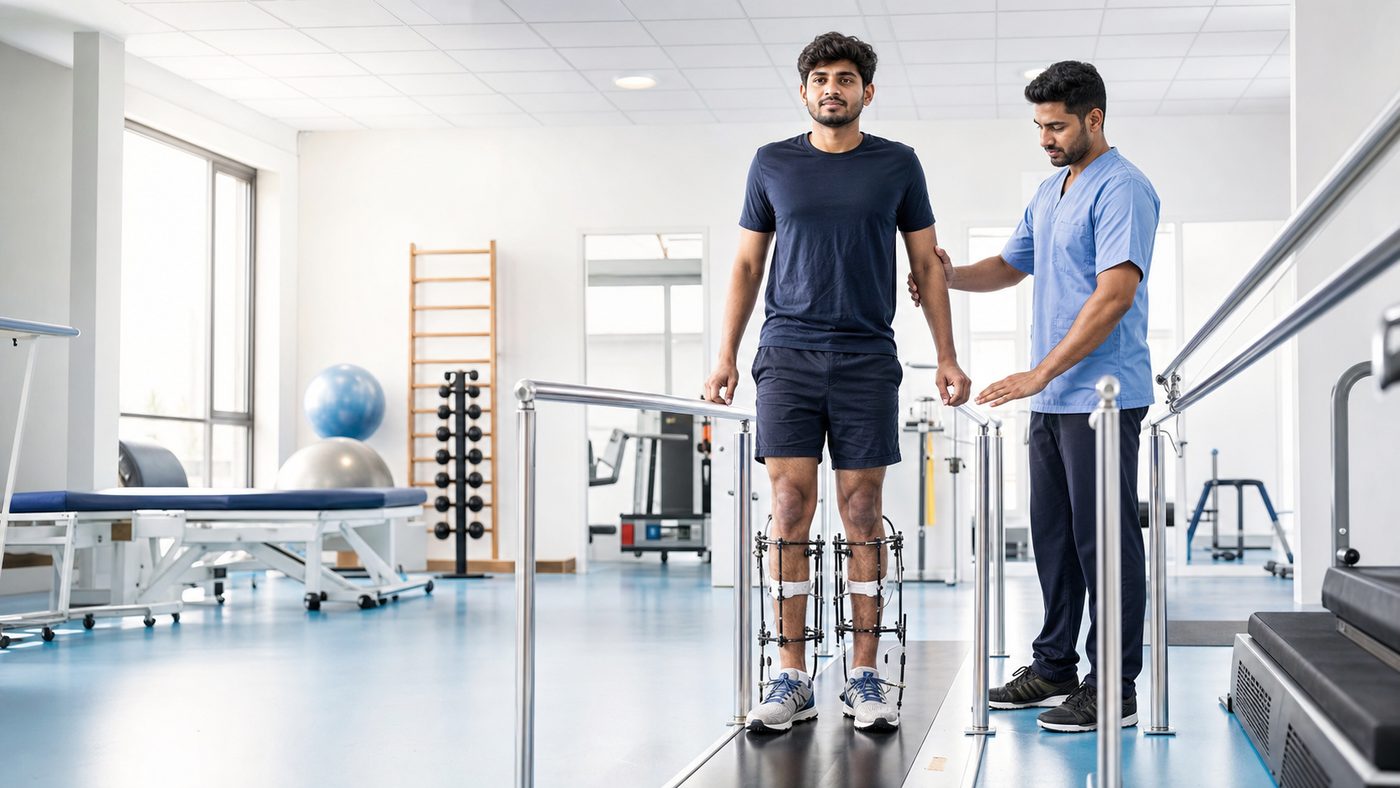
Yash came in at 164 cm with a plan to finish treatment in about eight months. He left roughly a year later at approximately 180 cm, after gaining 16.5 cm across bilateral femur and tibia lengthening.
At the time of this review, it was the largest total lengthening the center had recorded. The extra months were not because of poor bone healing. His regenerate formed well, callus consolidation stayed strong, and on some days the team was able to increase the distraction rate above the usual 1 mm.
That faster pace also brought its own challenge near the end, including a muscle-related stiffness issue and a minor residual flexion deformity. Even so, Yash described the problem as manageable, with full recovery expected over the following months.
Why He Chose Limb Lengthening
Yash does not point to one single moment. He describes years of small comments from strangers, friends, and social situations where his height was noticed out loud. The repeated message was that he had everything, except height.
Over time, those comments stopped feeling like casual remarks and became something he carried with him. By his mid-twenties, he decided to treat height increase surgery as a challenge he wanted to take on fully.
How the Surgery Was Structured
The full 16.5 cm lengthening was completed in two major segments. The first segment was bilateral femur lengthening of about 8.5 cm. The second was bilateral tibia lengthening of about 8 cm.
Between the two segments, he had a recovery break. Around three months into the journey, after gaining roughly three inches, the height difference began to feel real. He found himself comparing height with other patients, physiotherapists, and staff because his own eye level had changed.
His original target was 16 cm, but strong bone consolidation allowed the final number to cross that plan slightly. The same fast response that helped him reach the higher number also contributed to muscle tightness later, which is why monitoring by the surgeon and physiotherapy team remained important.
Pain Was Not the Biggest Challenge
When asked what was hardest about the year, Yash did not choose pain first. He said the hardest part was psychological.
His reasoning was simple. Pain has an endpoint. Frames come off. Surgical discomfort reduces. The height gain stays. Keeping that in mind helped him treat physical discomfort as a temporary problem rather than an open-ended one.
Sleep was disturbed during recovery. Food was difficult at the beginning because he came from South India and needed time to adjust to local food. By the end of the year, he said he would miss that same food after leaving.
The more difficult emotional part was watching people he had met at the center recover and leave before him. Some arrived after him and still went home earlier. That created a different kind of pressure: not physical pain, but the slow weight of being the one who stayed longer.
Why Mental Strength Matters
Yash makes one point very clearly: money alone does not finish this surgery. Resources can make treatment possible, but determination carries the patient through the hard phases.
He had seen patients with full resources struggle to reach their target because the mental strength was not there. In his view, the surgery provides the medical structure, but the patient has to bring the discipline, patience, and will to continue.
The First Time Outside During Recovery
Yash went outside during recovery when his mobility was around 50 percent. He was not fully independent yet and was still dealing with the frame, but he remembers feeling good.
What surprised him was that being taller did not feel exactly like the version he had imagined. His eye level had changed. His posture felt different. The reality was better in some ways, but also different from the scenes he had built up in his mind.
Documenting the Journey
He documented the process on Instagram from the beginning because he wanted others with similar insecurity to see a real-time account, not just a before-and-after result with the difficult middle removed.
He still receives messages asking whether the money and time were worth it. His answer remains steady. He believes later life may bring more money or more time, but not the same window to experience youth at a different height.
His Advice Before Starting
His first advice is mental preparation. A patient should not enter surgery while still negotiating the decision internally. If the mind is unsettled, smaller problems such as bad sleep, unfamiliar food, or a slow recovery week can feel much larger.
His second advice is to trust the treating team more than random information online. The surgeon and physiotherapist know the patient's imaging, recovery pattern, complications, and current limits. Generic online answers do not.
Finally, he advises choosing a center based on what can be verified. Look at documented results, speak to real patients, and ask not only whether the center can produce good outcomes, but also whether it can handle complications if they happen.
Yash left at about 180 cm, with one year behind him and a result he says he would repeat without hesitation. For him, the 16.5 cm gain is not just a number. It is the distance between where he started and where he felt he needed to be.