
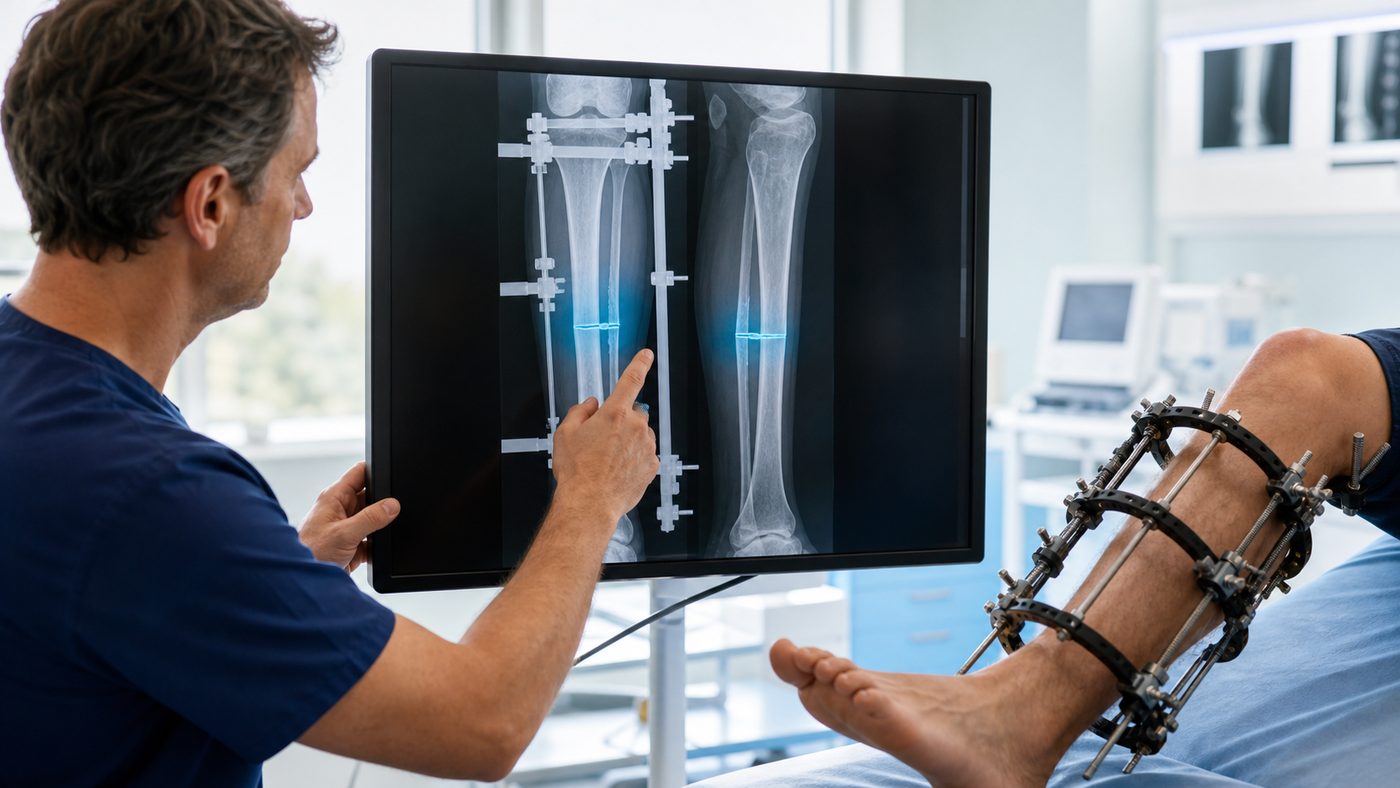
Day 22 of the distraction phase can look routine until an X-ray changes the plan. In some patients, the gap between the two bone ends starts closing earlier than expected, with dense mineralized bridging appearing before the target length has been reached.
Doctors call this premature consolidation. It is one of the trickier problems a lengthening procedure can face because the process depends on timing as much as stretching. New bone must form, but it must not harden completely before lengthening is finished.
What Early Bridging Callus Formation Looks Like
Early bridging callus formation happens when regenerate bone in the distraction gap hardens and bridges across before the planned lengthening is complete. Normally, that tissue stays soft and stretchable during active distraction, then calcifies after the target length is reached.
When bridging appears too soon, the nail or external fixator begins working against resistance. Turning the mechanism may become harder, more painful, or may stop producing movement altogether.
Routine X-rays are usually how surgeons catch it. Patients may sometimes notice a stiffer turning wheel or a new dull ache in the shin or thigh, but symptoms alone cannot confirm the problem. Imaging is what shows whether the regenerate is bridging early.
Why Premature Bone Healing Happens
Premature bone healing during limb lengthening surgery does not have one single cause. Children often form bone faster than adults, so pediatric cases can carry a higher baseline risk. Bone type matters too, because the tibia and femur can behave differently.
The rhythm of distraction also matters. If the distraction rate is too slow, or if the latency period before lengthening starts is too long, the body may get a head start on healing. A gap that is not being separated quickly enough will naturally try to close.
General health, bone density, calcium metabolism, medications, smoking habits, and consistency with the turning schedule can all influence how fast the regenerate matures.
How Surgeons Catch It Early
Monitoring may not feel exciting, but it is exactly what keeps premature consolidation manageable. The surgical team watches the regenerate zone on weekly or biweekly X-rays, looking for early bridging before it becomes solid enough to block further distraction.
Waiting for symptoms alone is unreliable. By the time a patient notices major resistance, the bridge may already be substantial.
When early bridging callus formation is caught soon enough, treatment can be straightforward. The surgeon may temporarily increase the distraction rate to apply more mechanical stress through the gap and keep the regenerate from hardening too early.
When a Rate Change Is Not Enough
Not every case responds to a simple rate adjustment. If premature consolidation has progressed far enough, the bridge can become solid enough to physically block further lengthening.
Pushing against a solid bridge can risk hardware strain, unwanted fracture, or significant pain without gaining more length. In these situations, a second procedure may be needed to break up the consolidated bone and allow distraction to continue.
Revision surgery adds time and stress, but it is usually safer than forcing the device against a hard bridge. Many patients who need revision still reach their target length, though the recovery takes a detour.
What Patients Should Remember
Premature consolidation is a known risk, but it is usually manageable when monitored carefully. The most important step for patients is simple: attend every scheduled X-ray and report any change in turning resistance, pain pattern, or device behavior.
Every appointment, X-ray, and small adjustment to the turning rate exists because the timing of bone healing matters. Healing faster than expected sounds positive, but during active limb lengthening it can work against the plan.
A fast-healing body is not a flaw. It is one more variable the surgical team watches closely, alongside alignment, regenerate quality, soft-tissue response, and patient comfort.