
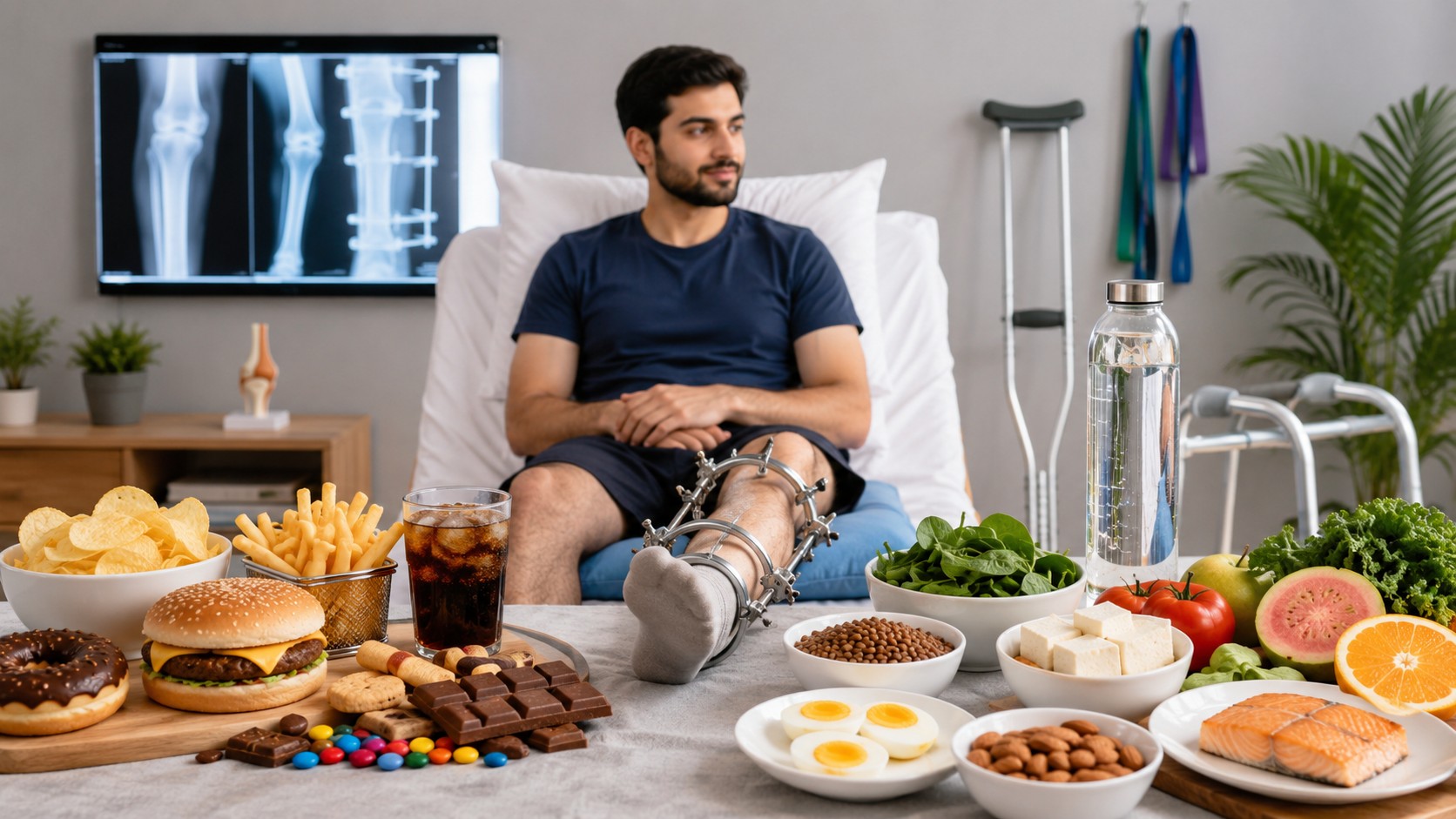
Leg lengthening recovery runs for months, not weeks. The distraction phase alone can stretch across two to three months depending on how much length is being added, and consolidation can take just as long or longer.
That means months of limited movement, frustration, physiotherapy, interrupted sleep, and cravings for food that feels comforting. Most patients already know junk food is not ideal. Fewer understand why it can specifically slow bone formation during recovery.
What the Bone Is Doing During Recovery
After the corticotomy, the body begins repairing the bone in a sequence similar to fracture healing. Inflammatory cells arrive first, a soft callus begins forming at the distraction gap, and then that soft tissue gradually mineralizes into stronger bone.
Every step depends on raw materials from food. Collagen needs protein and vitamin C. Mineralization needs calcium and vitamin D. Zinc and magnesium support cell regeneration and hundreds of enzyme reactions involved in tissue repair.
Junk food does not simply fail to provide these nutrients. In many cases, it works against them.
How Sugar Interferes With Healing
High sugar intake can increase chronic low-grade inflammation. Early healing inflammation is useful and controlled, but diet-driven inflammation is different. It can keep the body in a more irritated state and make tissue repair less efficient.
Refined sugar can also contribute to calcium loss through urine. That matters because calcium is one of the key minerals the body is trying to deposit into the distraction gap during consolidation.
This is why junk food and limb lengthening surgery are a poor combination from the early postoperative period onward. The concern is not only calories. The problem is cellular interference at the exact time bone is trying to do precise, resource-heavy work.
Processed Food, Salt, and Calcium Loss
Many processed foods are high in sodium. Frequent high-salt intake can increase calcium excretion, creating a slow drain on the mineral the new bone needs most during consolidation.
Colas and some carbonated drinks can add another issue through phosphoric acid, which may disturb calcium balance. Packaged fruit juices, sugary drinks, and energy drinks can combine sugar, caffeine, and poor nutrition in one daily habit.
Understanding foods to avoid after limb lengthening surgery is less about one strict blacklist and more about recognizing patterns. Blood sugar spikes, inflammation rises, calcium is pulled away, and the new bone receives little it can actually use.
Caffeine, Alcohol, and Absorption
Patients often rely on coffee or energy drinks during recovery because immobility and discomfort can be exhausting. Moderate coffee intake may be acceptable for some patients, but excessive caffeine can increase calcium loss through urine.
Alcohol is a more direct concern. It can interfere with vitamin D status and calcium absorption, both of which are central to bone healing. It can also affect osteoblast activity, the cells responsible for laying down new bone matrix.
Slower osteoblast function during consolidation can extend the time before the bone is strong enough for increased loading and full weight-bearing progression.
What Supports Bone Formation Instead
A stronger way to think about recovery nutrition is to match every avoided food with what the bone actually needs.
Protein from eggs, lentils, paneer, chicken, or fish helps build collagen. Vitamin C from citrus fruits, guava, or tomatoes supports collagen formation. Dairy, leafy greens, and almonds provide calcium. Vitamin D from sunlight, fatty fish, or doctor-advised supplementation helps the body absorb and use that calcium.
Nutrition during the bone regeneration process is not only a supplement plan. Supplements can fill gaps, but they cannot fully replace a daily diet that consistently supplies the nutrients needed across the full recovery period.
Why Cravings Happen During Leg Lengthening Recovery
Cravings are common during leg lengthening recovery. Movement is limited, sleep can be disturbed, pain or tightness can affect mood, and progress can feel slow. Boredom and discomfort often push patients toward processed snacks and sugary foods.
That does not make cravings a character flaw. It makes them predictable. The important part is planning for them before they become the default recovery diet.
Keeping protein-rich snacks nearby, limiting sugary foods at home, drinking enough water, and coordinating diet with physiotherapy and medical follow-up can make recovery more controlled.
The Quiet Effect of Food Choices
The connection between junk food and limb lengthening surgery outcomes is real, but it is quiet. There may be no dramatic symptom after one poor meal. The issue is what happens repeatedly over weeks and months.
During consolidation, the body is trying to turn soft regenerate bone into mature, load-bearing bone. The more consistently the diet supports that job, the better the recovery environment becomes.