
Bad knee pain can change the way you walk, climb stairs, work, and enjoy daily life. Many people assume that a painful knee always means knee replacement, but some active patients may still be able to preserve their natural joint.
Lower femoral osteotomy, also called distal femoral osteotomy or DFO, is a knee realignment surgery that corrects the angle of the thigh bone above the knee. By shifting pressure away from the damaged part of the joint, it can reduce pain and slow further wear.
What Is Lower Femoral Osteotomy?
The femur is the thigh bone, and the distal femur is the lower part of that bone near the knee. An osteotomy means the surgeon carefully cuts and repositions bone to improve alignment.
In a lower femoral osteotomy, the surgeon reshapes the thigh bone just above the knee so body weight passes through a healthier part of the joint. This is especially useful when one side of the knee has worn cartilage while the other side is still relatively healthy.
When Is DFO Recommended?
DFO is not used for every kind of knee pain. It is usually recommended when pain is linked to a visible or mechanical alignment problem.
Valgus Knee Deformity
Valgus knees, often called knock knees, happen when the knees angle inward. This can overload the outer side of the knee joint. A DFO helps straighten the leg and move pressure toward the healthier side of the knee.
Lateral Compartment Knee Osteoarthritis
If arthritis is mainly on the outer compartment of the knee, and the inner cartilage remains usable, lower femoral osteotomy may help redistribute load and delay knee replacement.
Post-Traumatic Knee Malalignment
A thigh bone fracture can sometimes heal at an incorrect angle. Over time, this can disturb knee mechanics. DFO may be used to restore better alignment after such injuries.
Types of Lower Femoral Osteotomy
Surgeons generally use two main approaches, depending on the patient, bone quality, correction required, and surgical plan.
Opening Wedge Osteotomy
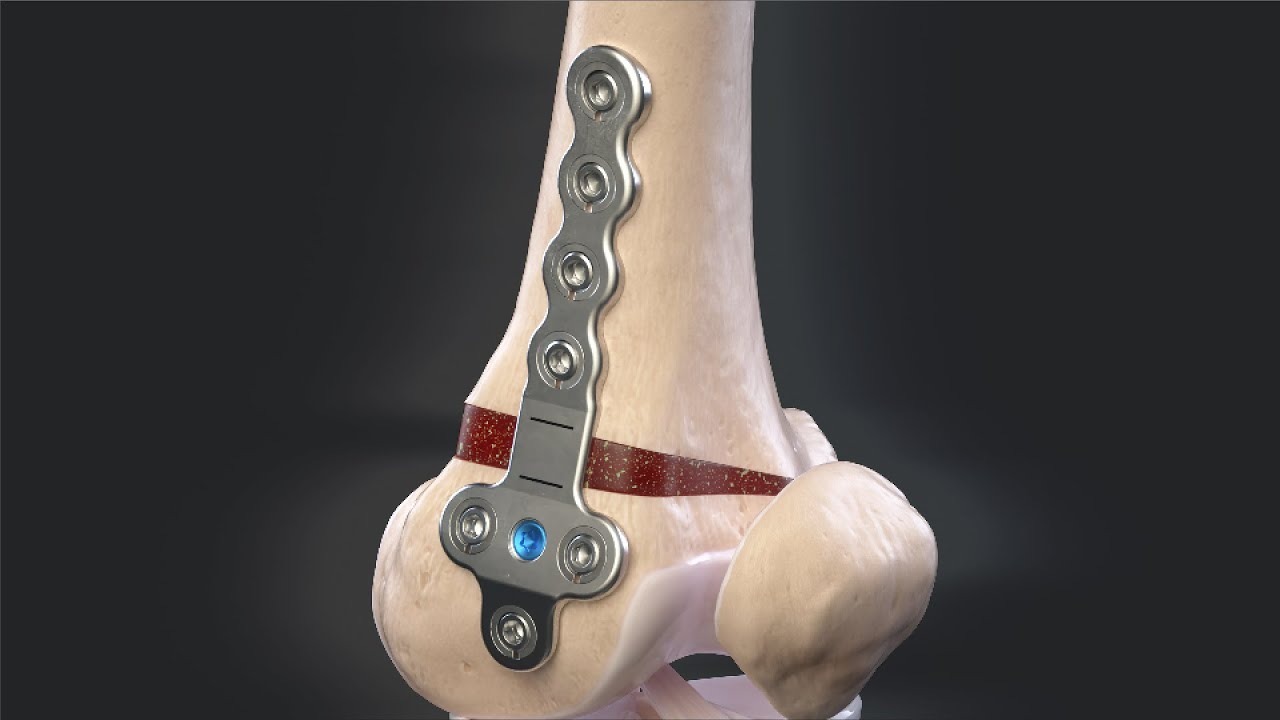
In an opening wedge osteotomy, the surgeon makes a controlled cut in the bone and opens a small gap to create the required correction. A bone graft or substitute may be used to support healing.
Closing Wedge Osteotomy
In a closing wedge osteotomy, a small wedge of bone is removed, and the bone ends are brought together to correct the angle. Both methods can be effective when chosen for the right case.
Pre-Surgical Planning
Planning is one of the most important parts of knee realignment surgery. Doctors usually take full-length standing X-rays to study the mechanical axis of the leg and measure the correction needed.
Modern imaging and computer-based planning can help the surgeon decide exactly how much bone correction is needed. This improves accuracy and helps protect the knee joint during recovery.
Lower Femoral Osteotomy Procedure
The surgery is performed under anesthesia, so the patient does not feel pain during the procedure. The surgeon makes an incision near the lower thigh and uses planned guides to cut the bone at the correct angle.
Once the bone is opened or closed into the new position, it is fixed with strong plates and screws. The incision is then closed and dressed. The procedure commonly takes about one to two hours, depending on complexity.
Benefits of Distal Femoral Osteotomy
The biggest benefit of DFO is joint preservation. Instead of replacing the natural knee with an artificial implant, the surgery changes alignment so the existing knee can work more evenly.
For active and younger patients, this can mean less pain, better mobility, and a possible delay of total knee replacement by many years. It may also allow a return to demanding work, fitness, or sports after full recovery.
Risks and Complications
Like any surgery, femoral osteotomy has possible risks. These can include infection, blood clots, stiffness, nerve irritation, delayed bone healing, or non-union where the bone does not fuse properly.
Careful surgical planning, regular follow-ups, physiotherapy, and following weight-bearing instructions help reduce these risks.
Recovery After Lower Femoral Osteotomy
Recovery takes patience and discipline. Most patients stay in the hospital for one to three days. Initial bone healing often takes six to eight weeks, while complete strength and confidence can take six to twelve months.
Weight-Bearing
In the early weeks, patients usually need crutches or a walker. Full weight on the operated leg is restricted until the surgeon confirms that the bone is healing safely.
Physiotherapy
Physiotherapy begins with gentle knee movement to avoid stiffness. As healing improves, the rehabilitation plan focuses on thigh strength, balance, walking pattern, and range of motion.
Success Rate of DFO Surgery
Lower femoral osteotomy has a high success rate in properly selected patients. Many patients report lasting pain relief and better knee function, especially when valgus alignment and lateral compartment overload are the main problems.
Success depends on correct patient selection, accurate correction, bone healing, and commitment to rehabilitation.
Lower Femoral Osteotomy vs High Tibial Osteotomy
Lower femoral osteotomy works on the thigh bone and is commonly used for knock knees where pressure is shifted to the outside of the knee.
High tibial osteotomy works on the shin bone and is often used for bow legs where pressure is concentrated on the inner side of the knee. The right surgery depends on the patient's alignment, cartilage wear pattern, and bone structure.
Ideal Candidate for Knee Realignment Surgery
A good candidate is often an active adult, usually under 60, with arthritis limited mainly to one side of the knee. The rest of the joint should still have reasonable cartilage.
The patient must also be ready for physiotherapy, follow-up visits, and lifestyle discipline. Smoking can interfere with bone healing, so patients may be advised to stop completely before surgery.
Cost of Lower Femoral Osteotomy in India
The cost of lower femoral osteotomy in India can vary based on the city, hospital, surgeon, implants, investigations, hospital stay, and rehabilitation needs.
A typical DFO surgery cost may range from around INR 1,50,000 to INR 3,50,000, though the final estimate should always be confirmed after medical evaluation and treatment planning.
Lower Femoral Osteotomy vs Knee Replacement
DFO preserves the natural knee joint by correcting the bone alignment around it. Knee replacement removes damaged joint surfaces and replaces them with artificial components.
Knee replacement can provide strong pain relief for older patients with widespread arthritis. DFO is usually considered for younger or active patients who want to preserve their natural joint and delay replacement.
FAQs on Lower Femoral Osteotomy
Is lower femoral osteotomy painful?
Some pain is expected after surgery, but it is managed with medication. As bone healing progresses, many patients notice that their original knee pain improves.
How long do plates and screws stay in the leg?
Plates and screws may stay in place permanently unless they cause discomfort or the surgeon recommends removal after the bone has healed.
Can I play sports after DFO?
Many patients return to active lifestyles after full healing and rehabilitation. The timeline can be nine to twelve months, and sports should resume only after medical clearance.
Conclusion
Lower femoral osteotomy can be a valuable joint-preserving option for selected patients with knee malalignment, knock knees, and lateral compartment pain. It corrects how weight passes through the knee and may delay the need for replacement.
If knee pain is affecting your mobility, a detailed orthopedic evaluation can help determine whether DFO, another realignment procedure, or a different treatment path is right for you.