
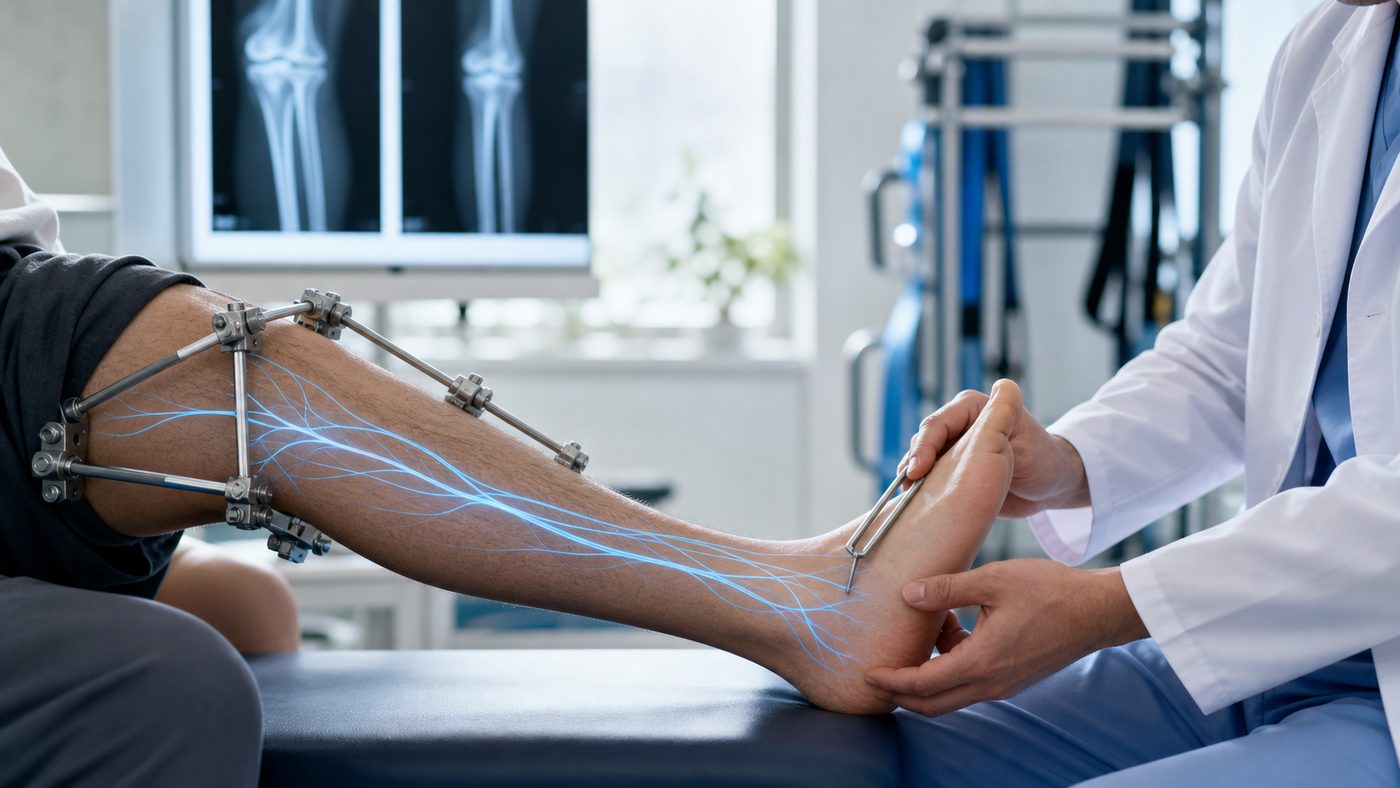
A nerve does not behave like a rubber band. Stretch it too quickly and it can react almost immediately with tingling, numbness, or a dull ache that patients may not know how to describe at first.
Slow the process down, however, and that same nerve can adapt to a surprising amount of new length without lasting harm. That narrow space between too fast and slow enough is where nerve adaptation during distraction osteogenesis stages actually happens.
This is one of the more delicate parts of limb lengthening surgery. Bone may be the focus of the operation, but nerves, blood vessels, muscles, tendons, and fascia all have to adjust as the limb changes.
Why Nerves Can Adapt Gradually
Peripheral nerves have some natural slack. The fascicles inside them are not perfectly straight. They sit slightly wavy and coiled, which allows a small amount of movement before true stretching begins.
As the bone lengthens, the nerve first becomes taut by using up that built-in slack. Only after that does the nerve tissue itself begin to experience real tension.
This is one reason many protocols use a distraction rate of around 1 mm per day, usually split into smaller increments. If the pace exceeds what the nerve can tolerate, blood flow within the nerve can drop, and that reduced blood supply is often what drives pain, numbness, or weakness.
What Happens Inside the Nerve
During the early days of lengthening, microscopic changes occur inside the axons and the connective tissue surrounding them. The nerve fibers elongate, and the tiny blood vessels supplying them must adapt too.
The problem is that nerve fibers and their blood supply do not always adapt at the same speed. If vascular supply falls behind the physical stretch, the nerve can become irritated or stressed.
Studies on distraction have suggested that around eight percent elongation may be a rough point where ischemic stress becomes more likely, though tolerance varies by patient and by nerve.
Why the Peroneal Nerve Gets Attention
The peroneal nerve is discussed often in tibial lengthening because of where it sits. It passes close to the fibular head and has less soft-tissue protection than deeper nerves.
Changes such as altered sensation on the top of the foot, difficulty lifting the foot, or early signs of foot drop require prompt attention. Waiting for an X-ray to show a problem is not the right approach, because nerve symptoms are usually clinical first.
Different Stages, Different Demands
Nerve adaptation during distraction osteogenesis stages is not one single event. Latency, active distraction, and consolidation each place different demands on the nerve.
During latency, the new callus is just beginning and there is usually less tension on surrounding soft tissue. During active distraction, tension builds every day, and this is when neurological symptoms are most likely to appear.
By consolidation, the nerve has usually settled into its new length if the earlier phases were managed well. That is why close monitoring during active lengthening matters so much.
Why Monitoring Matters
Patients are often told to report tingling right away. That instruction may sound simple, but it is one of the most important safety steps in limb lengthening recovery.
If numbness or tingling appears early, the surgeon may slow the distraction rate, pause temporarily, or monitor strength and sensation more closely. A small adjustment at the right time can give the nerve enough time to catch up.
Neurological complications of limb lengthening surgery are not just a rare footnote in a consent form. They occur often enough that experienced centers build scheduled nerve checks into follow-up instead of waiting for patients to mention symptoms casually.
Not Every Tingle Means Nerve Damage
The tricky part is that not every new sensation means nerve injury. Sometimes muscle, fascia, or skin tension can create odd feelings that are not nerve damage.
A nerve under strain often gives sharper or more specific symptoms that follow a recognizable nerve path. Sorting that out requires clinical judgment, which is why regular check-ins during distraction are important.
Patients sometimes downplay symptoms because they do not want to slow the process. But reporting a strange sensation is not a failure. Surgeons would rather hear ten false alarms than miss one symptom that truly matters.
Adjusting the Plan When Nerves Push Back
Two patients can lengthen the same bone by the same amount and have very different nerve responses. Age, previous nerve injury, diabetes, soft-tissue flexibility, and individual anatomy all affect how the nerve adapts.
This is why ongoing observation remains central to safe limb lengthening. A protocol can guide the process, but it cannot replace careful monitoring and honest communication between the patient and the surgical team.
In most cases, neurological symptoms remain manageable when caught early. The nerve's ability to adapt gradually is one of the reasons limb lengthening can work safely, but that adaptation needs time, patience, and attention.
If you are preparing for limb lengthening, ask your team how often they check sensation and strength during active distraction. Their answer tells you a lot about what monitoring will actually look like throughout recovery.