
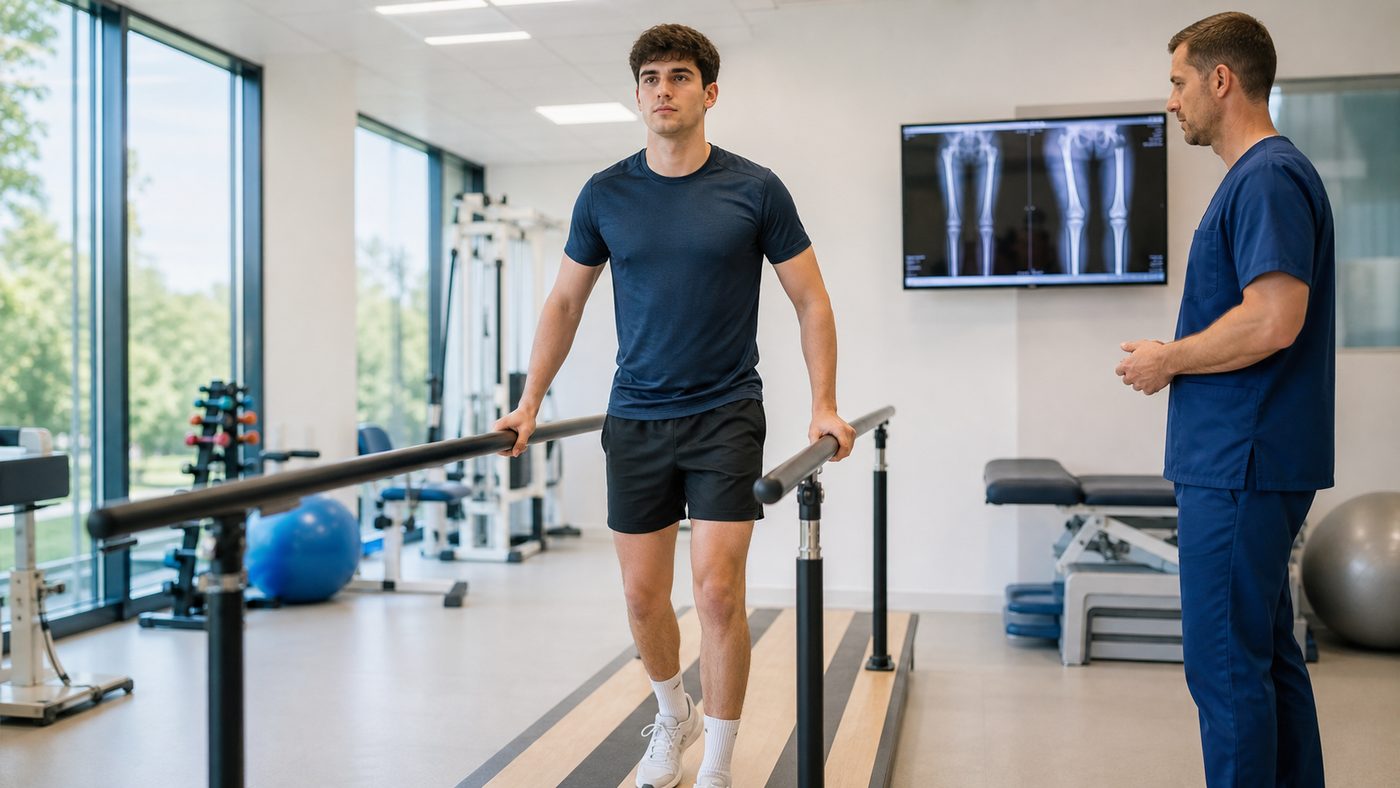
Five months ago he was 170 cm. Now he is 178 cm most mornings, usually settling around 177 cm by the time he has been walking through the day. That is 7.3 cm gained through limb lengthening surgery on both femurs.
He is no longer using crutches every day. Sometimes he walks without support at all. His physiotherapy team is still working on gait, strength, and confidence, but the basic walking milestone is already there.
Interestingly, he did not begin the process planning femur lengthening. When he first arrived, he was leaning toward tibia lengthening. After speaking with other patients and reading more about the procedure, he changed his mind. Femur lengthening gave him more room to gain height, felt safer to him, and made more sense once he understood the recovery pattern.
Choosing Femur Over Tibia
Ask him which segment he would recommend today and he answers quickly: femur. In his view, femur lengthening tends to come with fewer complications than tibia lengthening, though every patient is different.
He has seen tibia recovery stretch a month or two longer for some people. He has also heard patients describe a tight "ballerina" feeling around the ankle during recovery. Femur lengthening is not painless, though. He was clear that the actual lengthening phase can be more painful in the thighs.
His bigger point was that there is no one answer for everyone. Some patients tolerate tibia better. Others struggle more with femur. His opinion comes from living around other patients for months and watching the different recovery patterns unfold.
What the Recovery Actually Felt Like
For him, the first two centimeters were the hardest. He had pain and muscle spasms early in the process. Around the four centimeter mark, things started to ease.
He originally hoped to reach 8 cm. He stopped at 7.3 cm because his proportions already felt right. He could have pushed farther, but the goal was not only a number. It was also how his body looked and felt.
That decision still took mental strength. Pain builds up. Sleep can become difficult. On bad nights, quitting can feel tempting. He kept going because he did not want to look back later and feel regret about stopping short.
Why He Wanted More Height
He knows that 170 cm is not considered very short in India. Still, he felt the average around him was changing. Younger men are often taller now, which he connects with better nutrition and higher protein intake.
Outside India, 170 cm may read as below average in many settings. For him, average was not the goal. He wanted more room above it.
He has also met men well over six feet who still feel unhappy with their height. That convinced him that height increase surgery is deeply personal. It depends less on a universal number and more on what someone is actually trying to change in their own life.
Advice for Others Considering Limb Lengthening Surgery
His biggest advice is simple: your will to complete the process has to be stronger than your desire for height itself. Without that, he does not think most people can handle the difficult parts of the journey.
He also believes active physiotherapy matters more than many patients expect before surgery. Strength, gait training, and consistency shape the recovery as much as the surgical plan.
When choosing a clinic, he suggests looking beyond rooms and facilities. Experience, safety record, success rate, and the quality of follow-up care mattered much more once treatment actually began.
Where He Stands Now
He is still recovering, with another month or so of gait training and muscle strengthening ahead. Even so, he is already walking steadily and sometimes without support.
Looking back, he calls the five months difficult but also meaningful. He made real friends during the process and describes the experience as genuinely good in a way he did not expect.
For anyone weighing limb lengthening surgery, his story is a reminder that the number on the height chart is only part of the process. The mental side of distraction and recovery matters just as much as the centimeters gained.