
Menu
Address: D-30, Sushant Lok III, Sector 57, Gurugram, Haryana 122003
Leg Length Discrepancy (LLD) occurs when the two legs differ in length. The difference may arise from variations in the femur, tibia, or a combination of both bones.
Leg Length Discrepancy can occur when:
The severity of LLD can vary from minor differences that cause little discomfort to larger discrepancies that affect posture, walking mechanics, and spinal alignment.
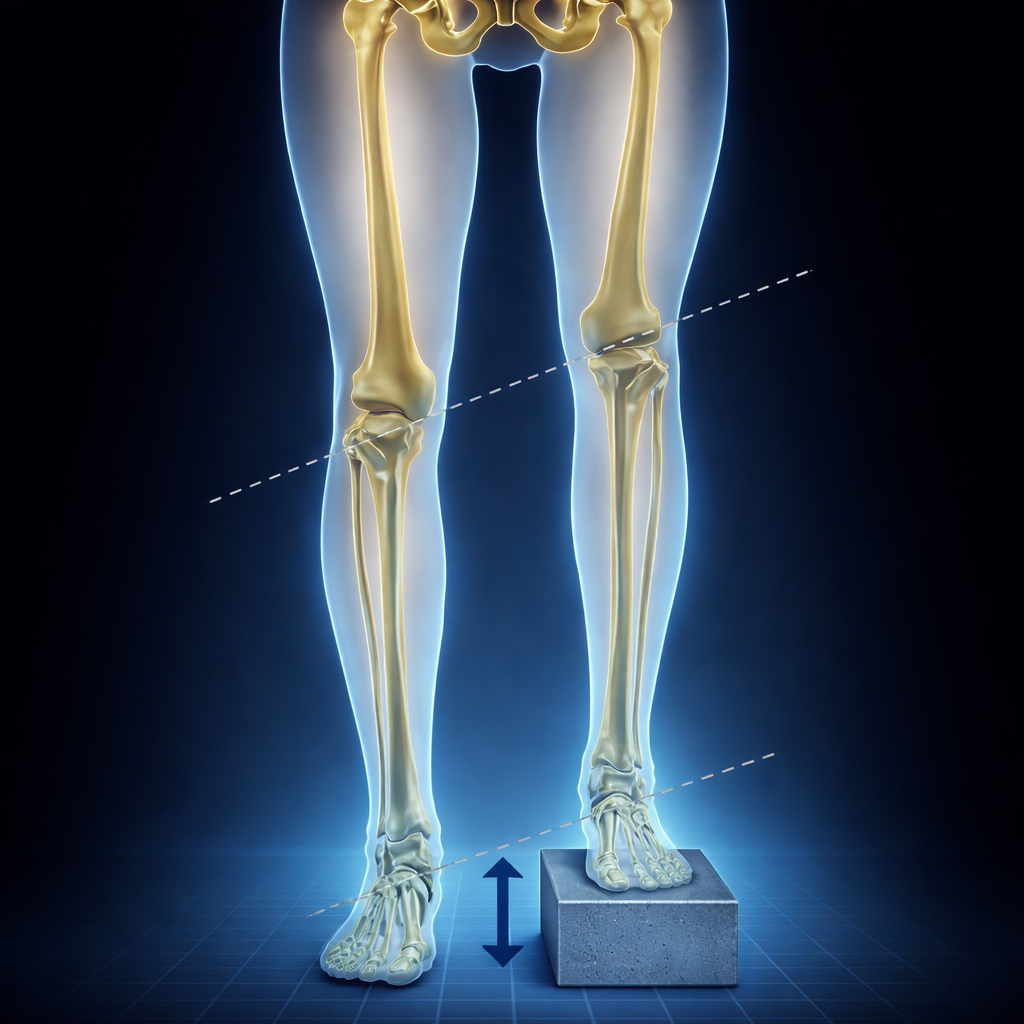
This occurs when the actual bone length differs between the legs. Structural discrepancies are usually caused by developmental or injury-related factors.
In this condition, the bones are equal in length but alignment problems in the pelvis, muscles, or spine create the appearance of a difference in leg length.
Uneven leg length can place additional stress on the spine.
Pelvic imbalance may cause discomfort in the hip joint.
Uneven load distribution may strain the knee joints.
Patients may develop limping or altered walking patterns.
The pelvis may shift to compensate for the leg length difference.
Long-standing LLD can contribute to spinal curvature.
Prolonged imbalance may lead to early joint wear.
If untreated, leg length discrepancy can progressively affect posture, spinal alignment, and long-term joint health.
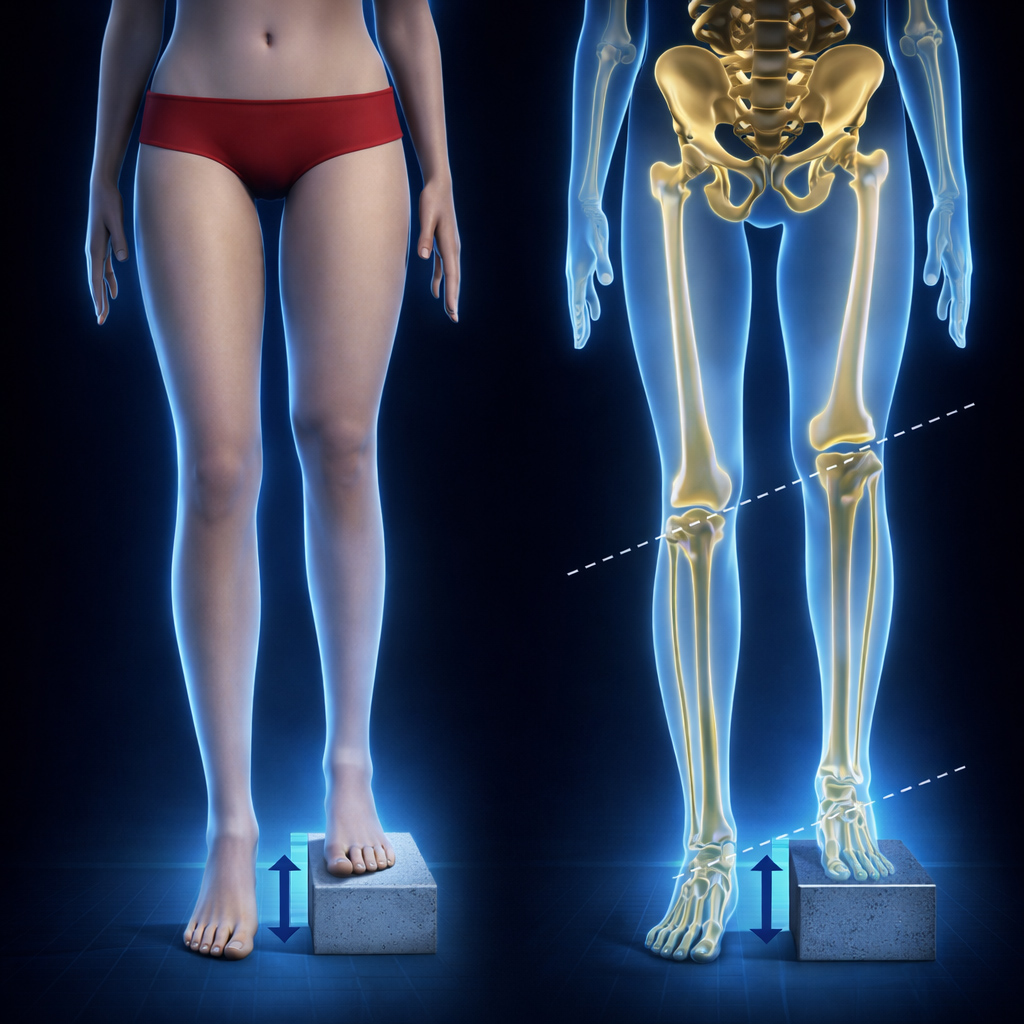
At Height Increase Info, diagnosing leg length discrepancy involves a detailed clinical evaluation combined with advanced imaging techniques to accurately measure bone length and alignment.
Accurate measurement helps determine whether conservative treatment options or surgical correction may be recommended.
Treatment depends on the severity of discrepancy.
For discrepancies under 1–2 cm, treatment may include:
These options are suitable for mild discrepancies that do not cause major functional problems.
For discrepancies greater than 2–3 cm, surgery may be recommended.
The most advanced and definitive solution for structural leg length discrepancy.
The technique is selected based on patient condition, budget, and medical assessment.
Leg length discrepancy correction and recovery depend on several clinical factors including bone health, flexibility of surrounding tissues, and overall medical condition.
The amount of correction achievable during limb lengthening varies depending on the patient’s physical condition and biological response to treatment.
Typically, 3–6 cm correction per bone can be achieved safely. Larger discrepancies may require staged procedures.
Recovery following limb lengthening surgery is gradual and requires structured rehabilitation along with continuous medical supervision.
Total recovery time may range from 6 to 12 months depending on the amount of correction required.
Strict adherence to the rehabilitation protocol helps ensure safe healing and optimal long-term results.
Permanent correction
Improved posture
Reduced back and hip pain
Balanced walking pattern
Prevention of early arthritis
Improved confidence & symmetry
The overall cost of leg length discrepancy treatment depends on several medical and procedural factors. Each case requires individualized assessment to determine the most suitable treatment plan.
Treatment costs vary depending on the surgical method, hospital stay duration, rehabilitation needs, and the complexity of the limb deformity.
India provides world-class orthopedic treatment at significantly lower costs compared to Western countries, while maintaining high surgical standards.
Exact treatment costs depend on individual medical evaluation. A personalized consultation helps determine the most appropriate treatment approach and estimated cost.
Specialized focus on limb lengthening procedures
Experience in structural correction cases
Advanced surgical techniques
Comprehensive rehabilitation guidance
Support throughout the treatment journey
We aim to provide safe, medically guided, and result-oriented solutions for patients seeking leg length discrepancy correction in India.