
Unequal leg length can contribute to hip and lower back pain in some people, but it is not automatically the cause. Small differences are common and often cause no symptoms. The useful question is whether a measured difference is affecting how you stand or walk, and whether it fits the pattern of your pain.
A diagnosis should not be based on a photograph, uneven trouser hems or a home tape measurement alone. An assessment can help distinguish a genuine difference in bone length from other reasons the legs feel uneven.
What Is Leg Length Discrepancy?
Leg length discrepancy means that the two lower limbs are not equal in length. It may be present from childhood or develop after an injury, growth disturbance or other condition. A fracture that heals in a shortened position is one possible acquired cause.
Some people notice a limp, altered posture or discomfort around the hip or back. Others have a measurable difference without any difficulty. Symptoms and their impact on everyday activity matter alongside the measurement.
Why the Hip and Back May Feel the Difference
The feet, legs, pelvis and spine work together during standing and walking. A length difference can lead to compensatory movement, such as a change in pelvic position or how a person steps. These adjustments may contribute to discomfort, particularly when the body has difficulty adapting.
However, an association does not prove that the difference is causing a particular person's pain. Hip joint problems, muscle strain, nerve irritation and spinal conditions can produce similar complaints. Treating a leg length difference will not necessarily resolve pain from another source.
A Shorter Bone or an Apparent Difference?
Clinicians distinguish a structural difference in bone length from an apparent or functional difference related to alignment, posture or restricted joint movement. The distinction matters because the same correction is not appropriate for every situation.
Bring any previous injury or surgery history to the consultation, including relevant imaging. Describe when symptoms began and whether standing, walking or particular activities make them worse. Avoid assuming that a single visible asymmetry explains everything.
How the Difference Is Assessed
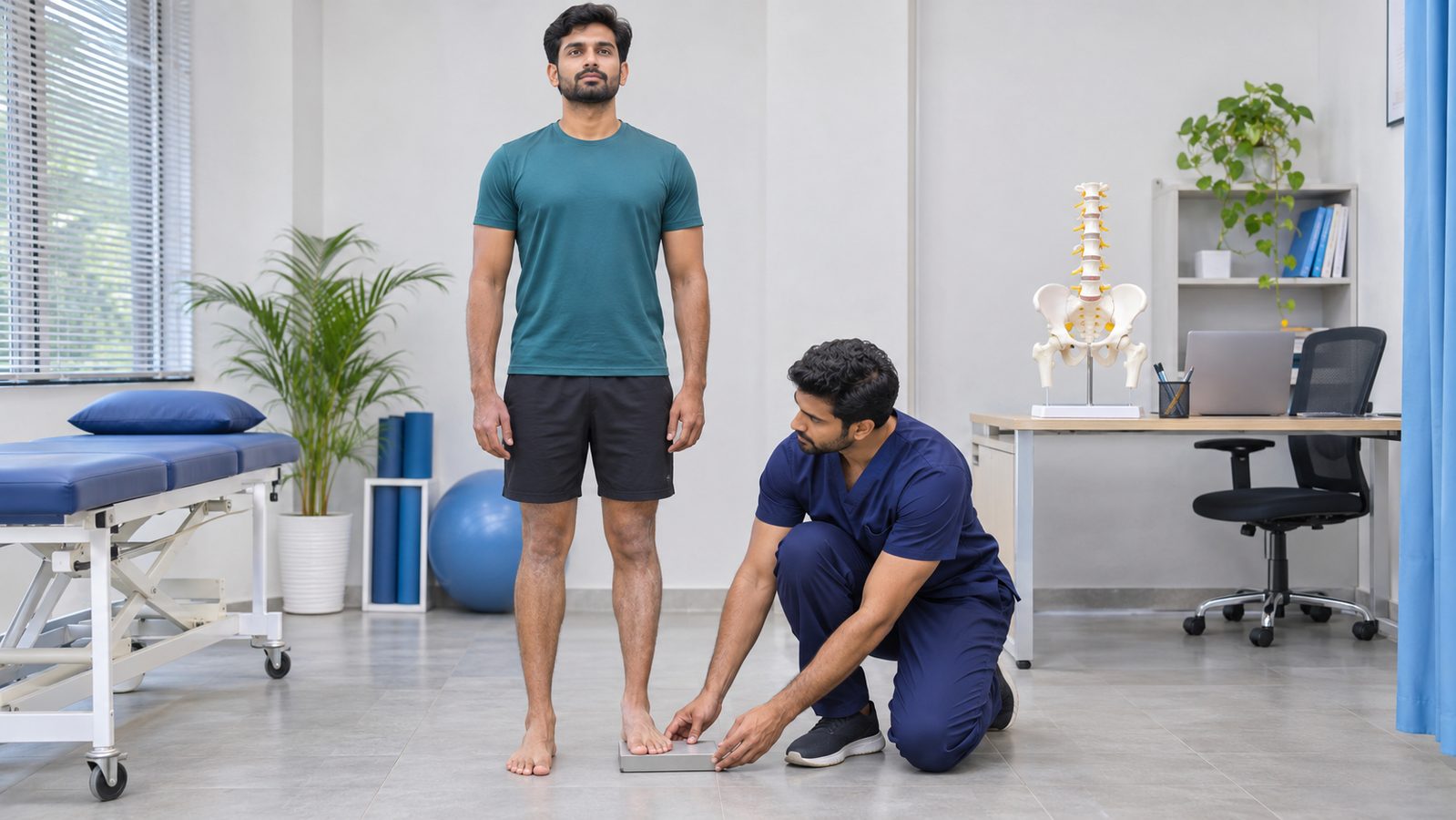
The clinician examines standing alignment, joint movement and walking. A standing block test may be used to estimate the difference by placing measured blocks beneath one foot. If greater precision is needed, appropriate imaging can assess the bones and alignment.
For a child who is still growing, assessment may include the expected difference at maturity. For an adult, the focus includes symptoms, function and any underlying hip, spine or previous fracture problem. Our leg length discrepancy treatment page explains the role of individualized planning.
Will a Shoe Lift Help?
A clinician may recommend a shoe lift for a smaller discrepancy when it appears relevant to symptoms or walking. Some lifts fit inside a shoe; others require an external shoe modification. The amount of correction and footwear fit should be assessed rather than guessed.
A lift is a treatment option, not a diagnostic shortcut or guaranteed cure. Discuss how its effect will be reviewed, including changes in comfort and walking. If a lift causes new discomfort, ask for a reassessment rather than adding extra height yourself.
Where Physiotherapy Fits In
A rehabilitation plan can address relevant movement restrictions, muscle function and walking habits. Exercises should match the assessment and any medical restrictions. They should not be presented as a way to lengthen a structurally shorter adult bone.
Ask the therapist what each part of the plan is intended to improve and how progress will be measured. A useful goal might be greater walking comfort or improved activity tolerance, rather than trying to make every aspect of posture look perfectly symmetrical.
Does Unequal Leg Length Require Surgery?
No. Observation or nonsurgical care is appropriate for many people. Surgery is considered selectively, taking account of the size and cause of the discrepancy, symptoms, growth remaining and the likely benefits and risks.
Options differ between growing children and adults and can include procedures affecting growth, shortening or lengthening. Read our guide to limb lengthening for an existing leg length discrepancy for further context. Surgery should not be proposed solely because someone has back pain and a minor difference in leg length.
When Pain Needs Prompt Medical Attention
Arrange an assessment if pain persists, limits daily activities or is accompanied by a worsening limp. Back pain that is severe and starts suddenly, worsens quickly, or occurs with fever or feeling unwell needs urgent review.
Seek emergency care for back pain with new bladder or bowel problems, numbness around the genitals or anus, or weakness or numbness affecting both legs. Pain after a serious accident also needs urgent assessment. These symptoms should not be attributed to leg length without medical evaluation.
Questions to Bring to Your Appointment
- Is there a measured structural difference, an apparent difference, or both?
- What other causes of my hip or back pain need assessment?
- Would a monitored lift trial or rehabilitation plan be appropriate?
- What improvement should we look for, and when should the plan be reviewed?
- If surgery is discussed, why would its benefits outweigh its risks in my case?
The goal is to identify what is causing difficulty and choose proportionate care. To discuss assessment and recovery support, contact Height Increase Info.
Further Reading
- Yale Medicine: limb length discrepancy
- AAOS OrthoInfo: lower limb length discrepancy
- NHS: back pain and warning signs
General patient information, not an individual diagnosis or treatment prescription. An orthopedic assessment is needed before decisions about correction or surgery.